Start wedding dress shopping by asking each seller about its current ordering and alterations schedule. There is no single deadline that fits made-to-order gowns, ready-to-wear purchases, and sample dresses. Work backward from your ceremony date using confirmed delivery information, then leave space for fittings and a final collection appointment.
The purpose of a timeline is to reveal dependencies. Your hem may depend on your shoes; your final bodice fit may depend on your undergarments. Ordering accessories before those choices are settled can create extra work. Keep one simple document with dates, contact details, receipts, and decisions that still need an answer.
Before booking an appointment
Define a spending limit that includes the garment and its preparation. Ask whether the boutique charges for appointments, how many guests may attend, and which sample sizes are available. If you need a particular accessibility arrangement, discuss it before arriving so the visit can be useful from the beginning.
Collect a few reference photographs rather than a large unedited folder. Add one sentence to each explaining the detail you like. A sleeve or neckline may be the attraction even if the rest of the dress does not suit your plans. Bring venue and ceremony information, but leave room to discover an unexpected shape.
At the first appointment
Treat the visit as a conversation about options. Explain your date, budget, movement needs, and any areas where you prefer coverage or support. Ask the stylist which gowns can arrive within your schedule. Looking at an unavailable design can be inspiring, but it should not become the basis of a purchase decision.
Try a manageable range of silhouettes. Record the designer or style identifier, quoted cost, estimated arrival, and alteration questions for serious candidates. Ask permission before taking pictures. After the appointment, make your own notes before discussing favorites with your guests; the most photogenic dress may not have been the most comfortable one.
Before paying a deposit
Read the written order carefully. Check the style, color, size, measurements, customization, expected delivery window, payment schedule, and cancellation or return terms. Ask how you will be notified of changes. Verbal reassurance is less useful than a clear answer in the paperwork you keep.
Find out who is responsible for alterations and whether those appointments must be reserved separately. A store's delivery estimate does not automatically guarantee a tailor's availability. Ask about the impact of any proposed customization, especially if it changes production time or cannot be reversed after the order is placed.
While the gown is being prepared
Choose shoes early enough for the hem fitting. Wear them indoors to test comfort and check the venue surface: a narrow heel behaves differently on lawn, gravel, and smooth flooring. If you expect to change shoes during the reception, discuss the height difference with the alterations professional before hemming.
Choose undergarments in consultation with the fitter. A garment's built-in structure may mean you need fewer separate pieces than expected. Avoid buying expensive solutions before understanding the gown's construction. Store receipts and ask about return conditions for items you cannot test until the dress arrives.
At the first fitting
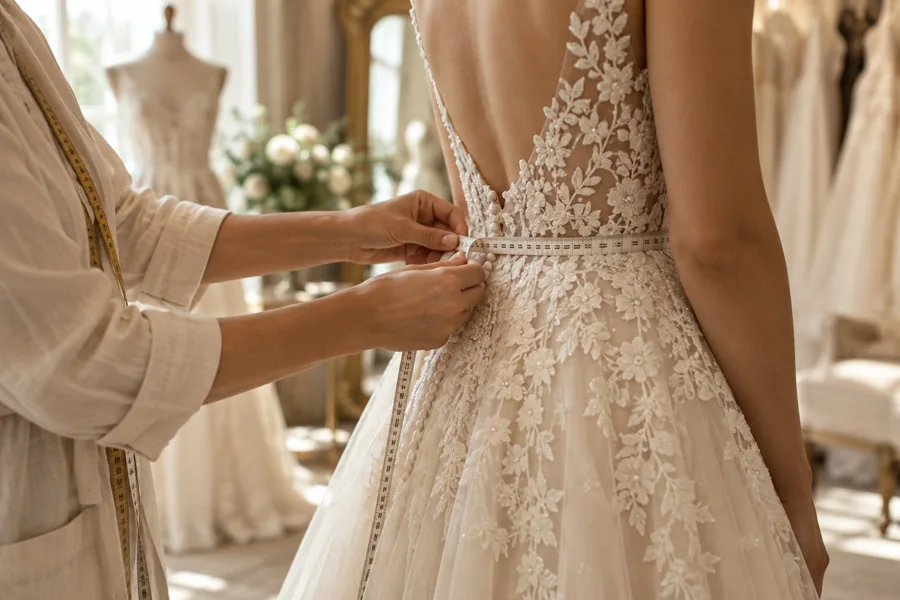
Bring the actual shoes and undergarments you intend to wear. Mention any changes since the order measurements and ask the fitter to explain the proposed adjustments. Walk, sit, and raise your arms. Describe specific sensations such as pinching at the waist or a strap that slips, rather than simply saying the dress feels wrong.
Ask how the train will be managed after the ceremony. A bustle is not the same as a wrist loop, and neither is automatically included. Request a demonstration and written care notes if available. If a friend will help on the day, arrange for that person to learn the fastening method at a later appointment.
At the final fitting and collection
Check the hem with your shoes, the closure, the support, and the bustle. Try the movements you expect during photographs and dinner. Photograph any complicated fastenings with permission. Confirm whether the gown has been pressed and how it should be transported so you do not undo that work before the ceremony.
Ask where and how to hang the dress at your destination. Follow the garment specialist's instructions rather than applying heat, steam, stain treatments, or scented sprays at home without advice. Some fabrics and embellishments react poorly to improvised treatment. Keep food, drinks, cosmetics, and pets away from the garment bag.
If your engagement is short
Tell sellers your actual date at the start. Ask about in-stock dresses, samples, and available alterations appointments. A shorter timeline can still produce a thoughtful choice, but it changes which options are realistic. Avoid assuming that a rush fee solves every production or fitting constraint.
Prioritize fit, condition, and an achievable preparation schedule. For a sample gown, inspect closures, seams, embellishment, and visible wear before committing. Ask the fitter about repair feasibility and cost. A lower purchase price may not be a saving if extensive changes are needed within a very tight window.
Keep the final week simple
Prepare a small clothing kit based on your outfit: suitable tape if recommended by your fitter, a sewing kit, spare fastenings, and comfortable shoes. Appoint one person to help protect the dress during transport and dressing. Share the order of dressing with hair and makeup teams so the neckline is handled sensibly.
A useful timeline ends with fewer decisions, not more. Once fit and delivery are confirmed, stop comparing your dress with new collections online. Review your written plan, check collection arrangements, and let your outfit become one settled part of a larger celebration. For silhouette questions, return to our guide to choosing a wedding dress.
Questions or corrections? Read our editorial policy.